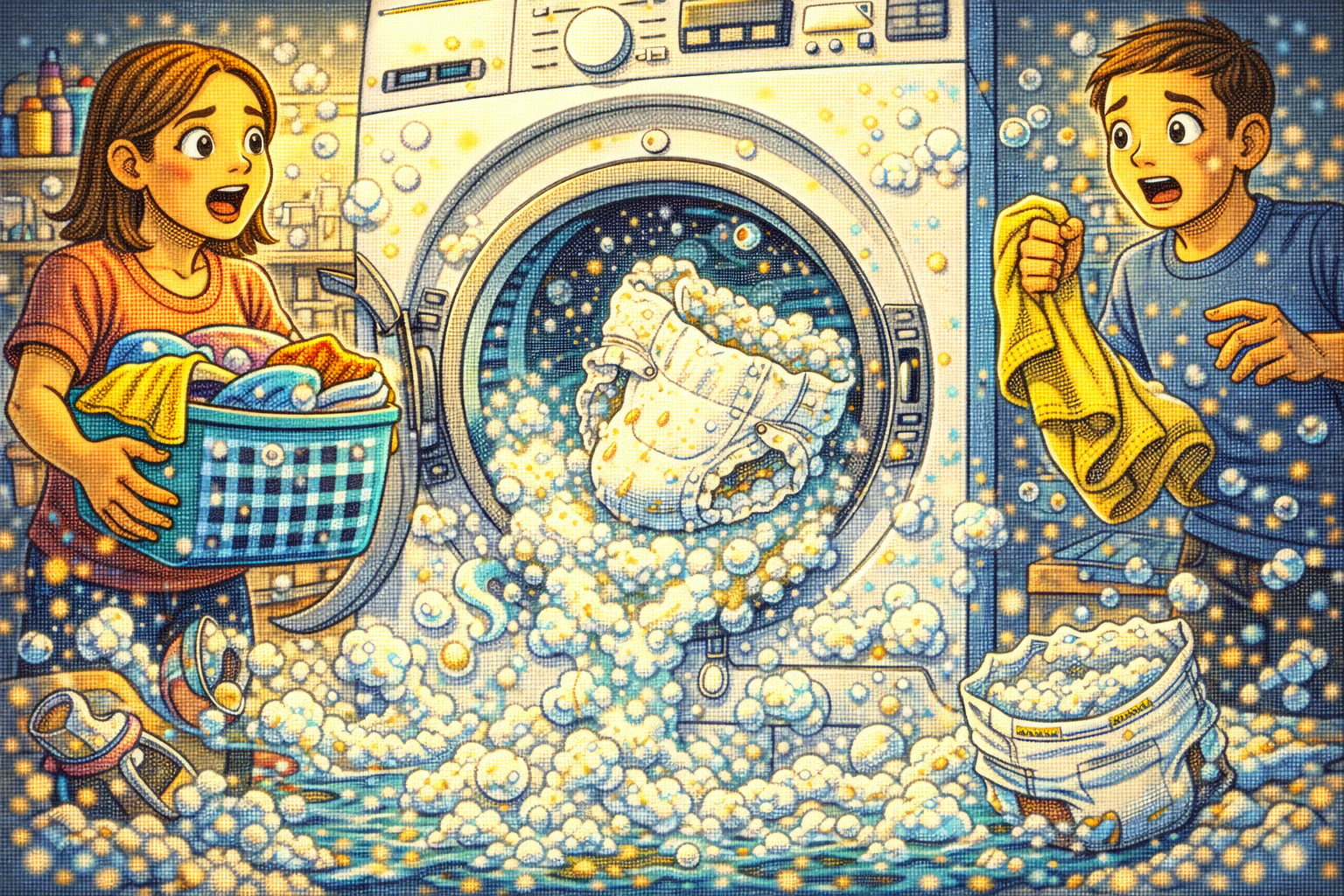
Diaper in the Washer
1. One rainy morning, I got an early start and ran a load of laundry.
비 오는 아침, 저는 부지런히 세탁기를 돌렸습니다.
● run a load of laundry: 빨래를 한 보따리 돌리다
• One rainy morning, I got an early start and ran a load of laundry.
(비가 오는 아침, 저는 부지런히 세탁기를 돌렸습니다.)
• I run a load of laundry before I start cooking.
(나는 요리를 시작하기 전에 빨래를 한 보따리 돌렸다.)
• I run a load of laundry once every week.
(나는 매주 한 번씩 빨래를 한 보따리 돌린다.)
⸻
2. When I pulled the clothes out, they were covered in tiny white bits of lint.
그런데 세탁물을 꺼내 보니 하얗고 작은 먼지들이 잔뜩 붙어 있었습니다.
⸻
3. At first, I thought one of my daughter’s toys had burst open. But the real culprit was a diaper.
처음에는 딸아이의 장난감이 터진 줄 알았는데, 범인은 바로 기저귀였습니다.
⸻
4. I am the only one who could have put a diaper in the washer, so it was my mistake.
세탁기에 기저귀를 넣을 사람은 저밖에 없으니 제 실수였습니다.
⸻
5. After a moment of frustration, I knew I had to deal with it quickly.
속상함도 잠시, 빨리 수습해야 했습니다.
⸻
6. I ran the clothes through the dryer on a lint-removal cycle, and I rinsed the washer while it was empty.
건조기의 먼지 털기 코스로 세탁물을 돌리고 세탁기는 빈 채로 헹궜습니다.
⸻
7. Then I washed and dried the clothes all over again and wiped down the inside of the dryer.
그런 다음 옷을 전부 다시 세탁하고 건조시키고 나서 건조기 내부도 닦아냈습니다.
⸻
8. Just to be sure, I even asked an AI chatbot what to do. It told me I had handled it well, which was a relief.
혹시나 해서 AI 챗봇에게도 어떻게 해야 하는지 물어봤는데, 잘 대처했다고 해서 안심했습니다.
⸻
9. One diaper caused a lot of trouble, but I felt proud of myself for fixing the mess on my own.
기저귀 한 장 때문에 고생을 엄청 했지만 스스로 문제를 해결해 뿌듯했습니다.
● cause a lot of trouble: 큰 문제를 일으키다
• One diaper caused a lot of trouble.
(기저귀 한 장 때문에 고생을 엄청 했습니다.)
• This could cause a lot of trouble later.
(이게 나중에 큰 문제가 될 수도 있어.)
• I don’t want to cause a lot of trouble.
(나 때문에 많이 곤란해지는 것은 원하지 않아.)
⸻
10. Now I’ve developed a habit of double-checking the laundry before I start the machine.
이제는 세탁기를 돌리기 전에 빨랫감을 꼭 다시 확인하는 습관이 생겼습니다.
● double-check: 다시 확인해 보다
• Now I’ve developed a habit of double-checking the laundry before I start the machine.
(이제는 세탁기를 돌리기 전에 빨랫감을 꼭 다시 확인하는 습관이 생겼습니다.)
• Let me double-check, just in case.
(혹시 모르니 내가 다시 확인을 해 볼게.)
• It doesn’t hurt to double-check.
(다시 확인해 봐서 나쁠 것도 없다.)
<Dialogue Practice>
A: Is something wrong? You look spent.
B: I accidentally ran the washer with a diaper in it this morning.
A: Oh no, it must have been a big mess.
B: You have no idea. Cleaning it up was exhausting.
A: It must have been a lot of work.
B: From now on, I'm always going to double-check when I load the washer.
A: 무슨 일 있어요? 피곤해 보여요.
B: 아침에 실수로 기저귀를 넣은 채로 세탁기를 돌렸거든요.
A: 맙소사, 난리가 났었겠네요.
B: 말도 마세요. 그거 치우느라 아주 진을 뺐어요.
A: 진짜 고생하셨겠어요.
B: 이젠 빨래 넣을 때 무조건 두 번 확인해야겠어요.
출처 : 입트영 3월호
'영어공부' 카테고리의 다른 글
| 26.03.17 Something That Happened in Bali (0) | 2026.03.16 |
|---|---|
| 26.03.17 Steps to Achieve Financial Goals (0) | 2026.03.16 |
| 26.03.16 Meta Acquires Singapore-Based AI Startup Manus to Boost Capabilities (0) | 2026.03.15 |
| 26.03.13 The Joy of Decluttering (1) | 2026.03.12 |
| 26.03.13 Hyundai to Deploy Humanoid Robots in Factories by 2028 (0) | 2026.03.12 |


