
1. My daughter and her family of four returned to Korea after living in the U.S. for two years.
내 딸은 두 해 동안 미국에서 살다가 가족 네 명과 함께 한국으로 돌아왔다.
● return: 돌아오다
- She returned home after the trip.
(그녀는 여행 후 집으로 돌아왔다.)
● live: 살다
- They lived in New York for five years.
(그들은 뉴욕에서 5년 동안 살았다.)
⸻
2. My grandkids are in 1st, 3rd, and 6th grade, and I was a bit worried about whether they could adjust to their Korean school.
내 손주들은 1학년, 3학년, 6학년에 다니고 있는데, 나는 그들이 한국 학교에 잘 적응할 수 있을지 걱정했다.
● worry: 걱정하다
- Don’t worry about the exam.
(시험에 대해 걱정하지 마.)
● adjust: 적응하다
- He quickly adjusted to the new job.
(그는 새 직장에 빨리 적응했다.)
⸻
3. But it turns out I didn’t need to worry.
그러나 나는 걱정할 필요가 없었다는 것이 드러났다.
● turn out: ~로 판명되다
- It turned out to be true.
(그것은 사실로 판명되었다.)
⸻
4. The kids came home after their first day, saying they had a great time and loved it.
아이들은 첫날 학교를 마치고 집에 와서 아주 즐거웠고 학교가 좋았다고 말했다.
● great time: 즐거운 시간
- We had a great time at the party.
(우리는 파티에서 즐거운 시간을 보냈다.)
● love: 좋아하다
- She loves playing the piano.
(그녀는 피아노 치는 것을 좋아한다.)
⸻
5. I had told my oldest grandson not to speak English at school, just in case the other students bullied him about it.
나는 큰손자에게 혹시 다른 학생들이 괴롭힐까 봐 학교에서 영어를 하지 말라고 말했다.
● speak: 말하다
- Please speak more slowly.
(좀 더 천천히 말해주세요.)
● bully: 괴롭히다
- Some kids bullied him at school.
(몇몇 아이들이 그를 학교에서 괴롭혔다.)
⸻
6. But when the teacher introduced him as a new student from America and asked him to introduce himself, the other kids shouted, “Do it in English!” So he gave his introduction in English.
그러나 선생님이 그를 미국에서 온 새 학생이라고 소개하고 자기소개를 시켰을 때, 다른 아이들이 “영어로 해!“라고 외쳤다. 그래서 그는 영어로 자기 소개를 했다.
● introduce: 소개하다
- Let me introduce my friend.
(내 친구를 소개할게.)
● introduction: 소개
- He made a short introduction.
(그는 짧은 소개를 했다.)
⸻
7. The teacher then asked all 24 students in the class to write about how they could help the new student get settled in.
그 후 선생님은 반의 24명 모두에게 새 학생이 어떻게 학교에 적응할 수 있도록 돕는지 글을 쓰라고 했다.
● write about: ~에 대해 쓰다
- Please write about your weekend.
(주말에 대해 쓰세요.)
● get settled in: 적응하다
- It took him time to get settled in at his new job.
(그는 새 직장에 적응하는 데 시간이 걸렸다.)
⸻
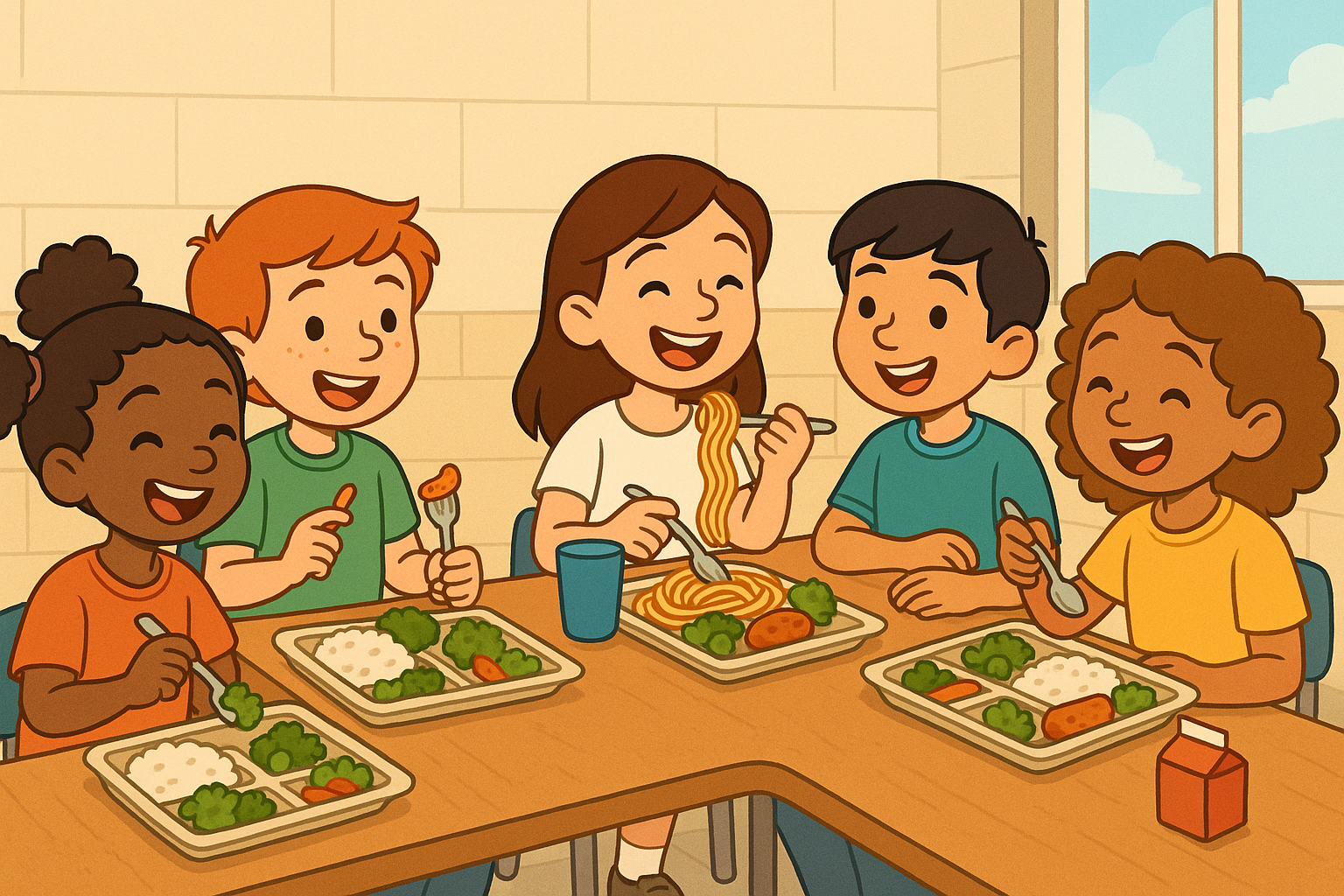
8. The kids say the best part is that the school lunches are way more delicious and varied than the ones back in the States.
아이들은 가장 좋은 점은 한국의 학교 급식이 미국보다 훨씬 더 맛있고 다양하다는 것이라고 말한다.
● lunch: 점심, 급식
- The school lunch was tasty.
(학교 급식은 맛있었다.)
● delicious: 맛있는
- The cake was delicious.
(그 케이크는 맛있었다.)
● varied: 다양한
- The shop sells a varied selection of books.
(그 가게는 다양한 책을 판다.)
⸻
9. I am truly grateful to the teachers and students for giving my grandkids a warm welcome.
나는 내 손주들을 따뜻하게 환영해 준 선생님들과 학생들에게 진심으로 감사하다.
● grateful: 감사한
- I am grateful for your help.
(당신의 도움에 감사드립니다.)
● warm welcome: 따뜻한 환영
- The team received a warm welcome.
(그 팀은 따뜻한 환영을 받았다.)
<Dialogue>
A: Are the kids fitting in at school in Korea?
B: Yes, they're getting used to it faster than I expected.
A: That's a relief. You were so worried about it.
B: I was. But they say it's even more fun than school in the U.S.
A: Really?
B: Yes, and they think the school lunches are way better, too.
A: 아이들이 한국 학교에는 잘 적응하고 있나요?
B: 네, 생각보다 적응을 빨리 하네요.
A: 걱정 많이 하셨는데, 다행이네요.
B: 맞아요. 오히려 미국에서 학교 다니는 것보다 훨씬 더 재미있다고 하네요.
A: 정말이요?
B: 네. 그리고 급식도 훨씬 더 맛있다고 해요.
출처 : 입트영 9월호
'영어공부' 카테고리의 다른 글
| 25.09.17(W) Study Group (0) | 2025.09.16 |
|---|---|
| 25.09.17(W) Coca-Cola to Launch Cane Sugar Version of Its Classic Soda in the U. (0) | 2025.09.16 |
| 25.09.16(T) Markets Rally Despite Lingering Uncertainty over U.S. Economic Direction (0) | 2025.09.15 |
| 25.09.15(M) Meta Hits Record Stock Price amid Aggressive Al Expansion (0) | 2025.09.14 |
| 25.09.15(M) Reducing Anxiety (0) | 2025.09.14 |


