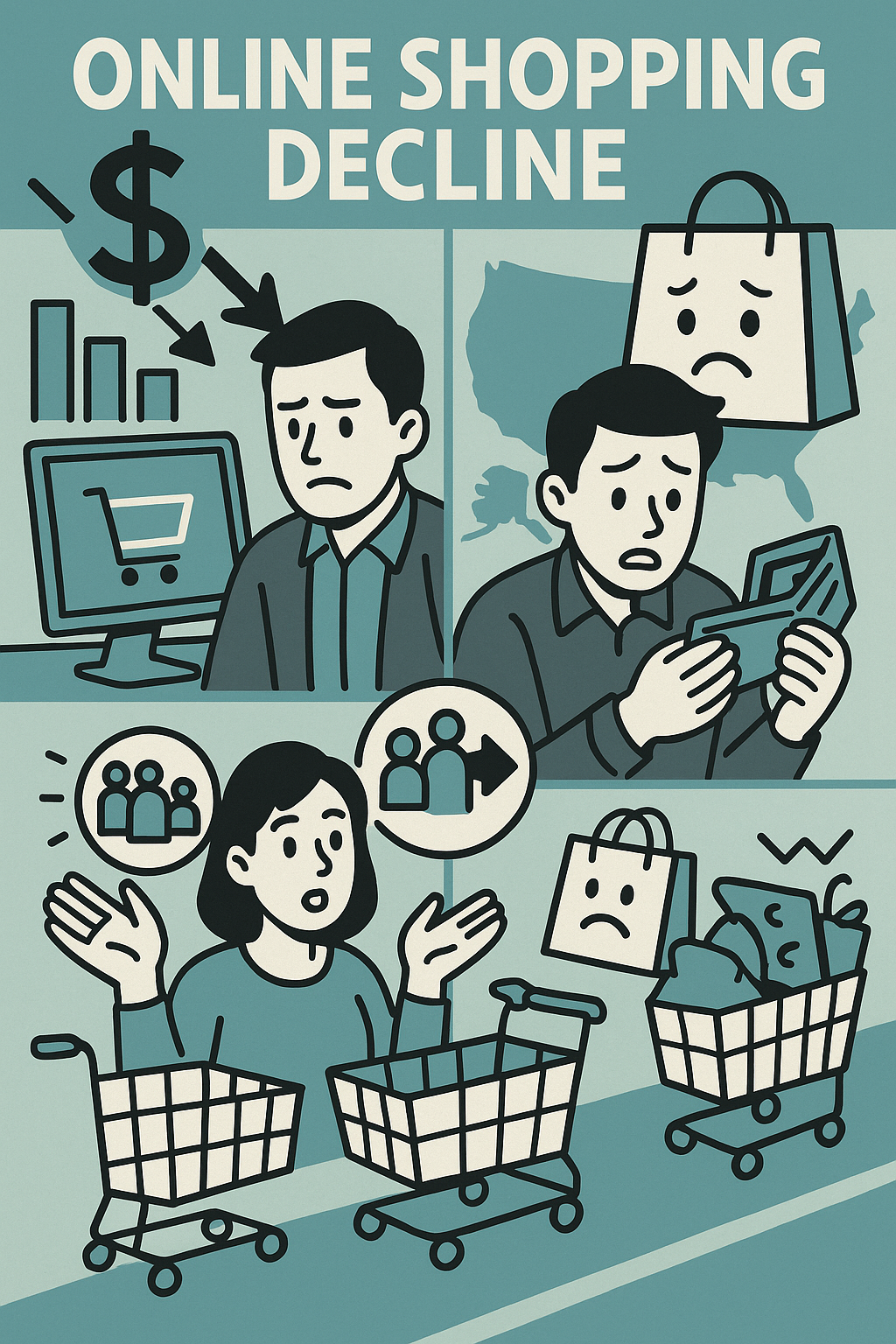
Tariffs and rising costs trigger online shopping slowdown
1. Online shopping has experienced its sharpest decline in over a decade, driven by trade tensions and tariffs introduced under President Trump.
온라인 쇼핑이 10여 년 만에 가장 큰 폭으로 감소한 것으로 나타났다. 무역 갈등과 트럼프 행정부가 도입한 관세 정책 등이 주요 원인으로 지목된다.
● sharpest decline: 가장 큰 폭의 감소
- Online ad spending saw its sharpest decline since 2008.
(온라인 광고 지출은 2008년 이후 가장 큰 폭으로 감소했다.)
- The company recorded the sharpest decline in quarterly sales in a decade.
(그 회사는 10년 만에 가장 큰 폭의 분기 매출 감소를 기록했다.)
● trade tensions: 무역 갈등
- Trade tensions between the two countries escalated last year.
(두 나라 간 무역 갈등은 지난해 고조됐다.)
- Businesses delayed investment amid rising trade tensions.
(기업들은 고조되는 무역 갈등 속에 투자를 미뤘다.)
● tariffs: 관세
- New tariffs increased import prices across several industries.
(새 관세로 여러 산업에서 수입 가격이 상승했다.)
- The government imposed tariffs on steel and aluminum.
(정부는 철강과 알루미늄에 관세를 부과했다.)
2. A survey reveals significant year-over-year drops in key e-commerce categories, including office supplies, sporting goods, and electronics.
최근 조사에 따르면 사무용품, 스포츠용품, 전자기기 등 주요 전자상거래 품목의 매출이 전년 대비 크게 줄어든 것으로 나타났다.
● year-over-year (YoY): 전년 대비
- Retail sales rose 3% year-over-year.
(소매 매출은 전년 대비 3% 증가했다.)
- Profits declined year-over-year in Q2.
(2분기 이익은 전년 대비 감소했다.)
● e-commerce categories: 전자상거래 품목군
- Beauty and home goods are fast-growing e-commerce categories.
(뷰티와 생활용품은 빠르게 성장하는 전자상거래 품목군이다.)
- Retailers are rebalancing e-commerce categories after the pandemic.
(유통업체들은 팬데믹 이후 전자상거래 품목군을 재조정하고 있다.)
● significant drops: 큰 폭의 감소
- The report shows significant drops in consumer confidence.
(보고서는 소비자 신뢰의 큰 폭 하락을 보여준다.)
- Airline bookings saw significant drops in April.
(항공권 예약은 4월에 큰 폭으로 줄었다.)
3. Only grocery sales showed resilience, as consumers adjusted their spending due to uncertainty and rising prices.
불확실성과 물가 상승으로 인해 소비자들이 소비 습관을 바꾸면서 식료품 판매만이 상대적으로 견조한 흐름을 보였다.
● showed resilience: 견조한 흐름을 보였다
- Exports continued to show resilience despite the global economic slowdown.
(세계 경기 둔화에도 불구하고 수출은 계속해서 견조한 흐름을 보였다.)
● grocery sales: 식료품 판매
- Grocery sales increased sharply during the holiday season.
(연휴 기간 동안 식료품 판매가 급격히 증가했다.)
- Rising grocery sales reflect changes in consumer priorities.
(식료품 판매 증가는 소비자들의 우선순위 변화를 반영한다.)
4. The survey found that a third of shoppers delayed purchases, while others sped up buying to avoid future import costs.
조사에 따르면 소비자 3명 중 1명은 구매를 연기한 경험이 있으며, 향후 수입비용 상승을 피하기 위해 오히려 구매를 서두른 소비자도 있었다.
● delay purchases: 구매를 연기하다
- Many shoppers delay purchases until major sales events.
(많은 소비자들이 대형 할인 행사 때까지 구매를 미룬다.)
- Households delayed big-ticket purchases amid uncertainty.
(가계는 불확실성 속에서 고가 상품 구매를 미뤘다.)
● speed up buying: 구매를 서두르다
- Consumers sped up buying ahead of the tax increase.
(소비자들은 세금 인상 이전에 구매를 서둘렀다.)
- People often speed up buying when prices are expected to rise.
(가격 상승이 예상되면 사람들은 종종 구매를 서두른다.)
● import costs: 수입 비용
- Import costs surged due to higher shipping rates.
(운송비 인상으로 수입 비용이 급등했다.)
- Firms are passing higher import costs on to consumers.
(기업들은 상승한 수입 비용을 소비자에게 전가하고 있다.)
5. Many consumers are now more willing to choose American-made products or seek domestic alternatives if overseas prices increase.
해외 제품 가격이 인상될 경우 미국산 제품을 선택하거나 국내 대체재를 찾는 데 더 적극적인 소비자들이 많아졌다.
● American-made products: 미국산 제품
- Demand for American-made products is rising amid global trade tensions.
(세계 무역 갈등 속에서 미국산 제품의 수요가 증가하고 있다.)
● domestic alternatives: 국내 대체재
- Consumers are shifting to domestic alternatives due to higher import prices.
(소비자들은 수입품 가격 상승으로 국내 대체재로 이동하고 있다.)
6. Retailers are being forced to reevaluate sourcing, pricing, and product availability in response to changing consumer behavior.
유통업체들은 이러한 소비자 행동 변화에 대응하기 위해 조달, 가격 책정, 상품 공급 전략 재검토가 불가피하다.
7. Delivery and return costs are also straining the e-commerce industry, prompting companies to tighten policies.
배송 및 반품 비용 역시 전자상거래 업계를 압박하고 있어 기업들은 관련 정책을 강화하고 있다.
● straining the e-commerce industry: 전자상거래 업계를 압박하다
- Rising labor costs continue to strain the e-commerce industry.
(노동비용 상승이 전자상거래 업계를 계속해서 압박하고 있다.)
8. Executives report higher shipping expenses and a growing volume of returns.
경영진들은 운송비 상승과 반품 건수 증가를 보고하고 있다.
● higher shipping expenses: 운송비 상승
- Retailers are struggling with higher shipping expenses amid global supply chain disruptions.
(유통업체들은 전 세계 공급망 교란 속에서 운송비 상승으로 어려움을 겪고 있다.)
9. Many retailers are now requiring larger minimum orders for free shipping or pushing in-store options to reduce last-mile delivery costs.
현재 많은 유통업체들이 무료배송을 위한 최소 주문 금액을 상향 조정하거나, 최종 배송 비용을 줄이기 위해 매장 픽업 등 오프라인 옵션을 적극적으로 추진하고 있다.
● last-mile delivery costs: 최종 배송 비용
- Companies are investing in new technologies to reduce last-mile delivery costs.
(기업들은 최종 배송 비용을 줄이기 위해 신기술에 투자하고 있다.)
- Last-mile delivery costs remain one of the biggest challenges in e-commerce.
(최종 배송 비용은 전자상거래에서 가장 큰 과제 중 하나로 남아 있다.)

출처 : 귀트영 9월호
'영어공부' 카테고리의 다른 글
| 25.09.26(F) Big Tech Expands Control over Global Internet Cables (0) | 2025.09.25 |
|---|---|
| 25.09.26(F) Clay Trails (0) | 2025.09.25 |
| 25.09.25(T) GV Film Screening (2) | 2025.09.24 |
| 25.09.24(W) I have a dream (1) | 2025.09.23 |
| 25.09.24(W) Raising Cane's Becomes Top Chicken Chain Contender with Simple Menu (0) | 2025.09.23 |


