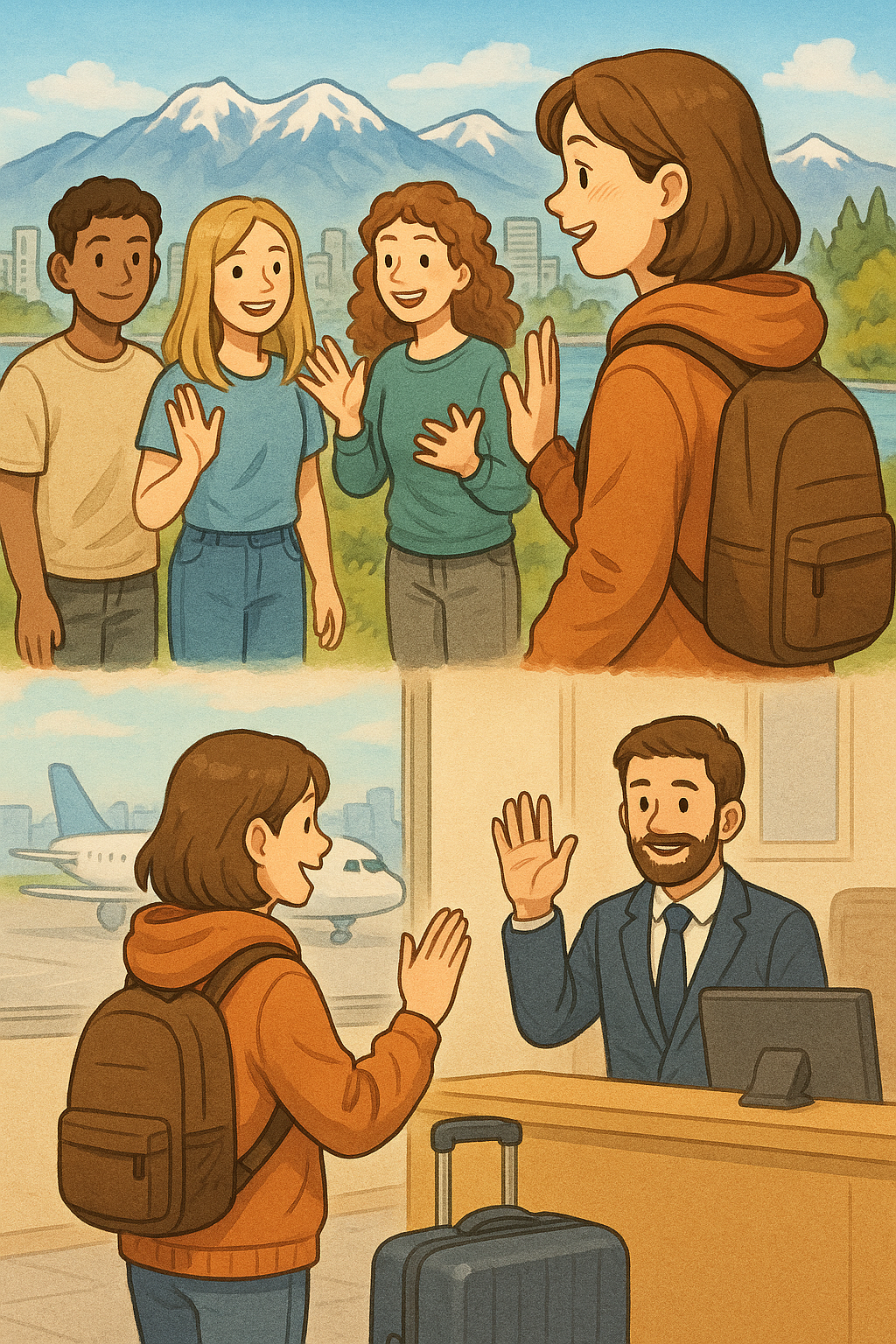
3 Months in Canada
1. After working for 15 years, I took a one-year leave from my job for various reasons.
직장 생활을 15년째 하던 중 이런저런 이유로 1년간 휴직을 하게 되었습니다.
● take a one-year leave: 1년 휴직을 하다
- I decided to take a one-year leave after my daughter was born.
(나는 딸아이가 태어나고 나서 1년 휴직을 하기로 결심했다.)
- I experienced burnout and had to take a one-year leave.
(나는 번아웃을 겪고 1년간 휴직을 할 수밖에 없었다.)
● for various reasons: 여러 가지 이유로
- She quit her job for various reasons, including health and family.
(그녀는 건강과 가족 문제 등 여러 가지 이유로 직장을 그만두었다.)
- For various reasons, the project was delayed several months.
(여러 가지 이유로 프로젝트는 몇 달간 지연되었다.)
⸻
2. I entered the workforce right after graduation. So, I wanted to spend that year of rest in a meaningful way.
학교를 졸업하자마자 사회생활을 시작했기에, 그 1년의 휴식기를 의미 있게 보내고 싶었습니다.
● enter the workforce: 사회에 진출하다, 직장 생활을 시작하다
- Many young people now enter the workforce later than before.
(요즘 젊은이들은 예전보다 늦게 사회에 진출하는 경우가 많다.)
- She entered the workforce right after college graduation.
(그녀는 대학 졸업 후 곧바로 직장 생활을 시작했다.)
⸻
3. The most memorable part was a three-month study trip to Canada that I took by myself.
그중 가장 기억에 남는 것은 혼자 떠난 3개월간의 캐나다 연수였습니다.
● by myself: 혼자서, 스스로
- I traveled to Japan by myself for the first time last year.
(작년에 처음으로 혼자 일본 여행을 갔다.)
- She learned how to cook by herself.
(그녀는 요리를 혼자 배웠다.)
⸻
4. I had planned to go with my husband and our two kids, but it didn’t work out.
처음에는 남편과 두 아이 모두 함께 가려 했지만, 상황이 여의치 않았습니다.
● not work out: (상황이) 잘 안 되다, 여의치 않다
- We wanted to go together, but things did not work out.
(우리는 함께 가고 싶었지만 상황이 여의치 않았다.)
- The plan did not work out as we had hoped.
(계획이 우리가 기대한 대로 잘 풀리지 않았다.)
⸻
5. My husband encouraged me to go on my own.
남편은 저 혼자라도 다녀오라고 격려해 주었습니다.
● encourage someone to (do): ~하도록 격려하다
- My parents encouraged me to follow my dreams.
(부모님은 나에게 꿈을 따르라고 격려하셨다.)
- The teacher encouraged students to express their opinions freely.
(선생님은 학생들이 자유롭게 의견을 표현하도록 격려했다.)
⸻
6. My English didn’t improve dramatically in just three months. But spending time in my late 30s making friends in their early 20s and traveling all over Vancouver felt like a gift.
비록 3개월 만에 영어 실력이 눈에 띄게 늘진 않았지만, 30대 후반의 제가 20대 초반 친구들과 어울리며 밴쿠버 곳곳을 여행한 시간은 제게 선물 같은 시간이었습니다.
● travel all over ~ : ~곳곳을 여행하다
- We traveled all over Italy during our honeymoon.
(우리는 신혼여행 동안 이탈리아 곳곳을 여행했다.)
- He spent a year traveling all over Southeast Asia.
(그는 1년 동안 동남아시아 전역을 여행했다.)
⸻
7. I’m so grateful to my husband for always supporting me and giving me strength, and I want to tell him that I love him.
늘 저를 응원하고 힘이 되어주는 남편에게 고맙고, 사랑한다고 말하고 싶습니다.
● give someone strength: ~에게 힘이 되어주다
- My parents always give me strength when I feel discouraged.
(내가 낙심할 때마다 부모님은 힘이 되어 주신다.)
- Spouses should give each other strength.
(부부는 서로에게 힘이 되어 주어야 한다.)
● be grateful to someone for ~: ~에게 …에 대해 감사하다
- I’m deeply grateful to my team for their support.
(나는 팀의 지원에 깊이 감사하고 있다.)
- She was grateful to her mentor for his guidance.
(그녀는 멘토의 조언에 감사했다.)

<Dialogue>
A: Did you take a trip to Canada?
B: Yes, I spent three months in Vancouver.
A: Did you go as a family?
B: No, things didn't work out as we had planned, so I went alone.
A: Wow, that must have been a very meaningful time.
B: Yes, it really felt like a gift.
A: 캐나다로 여행 다녀오셨어요?
B: 네, 밴쿠버에서 3개월 지냈어요.
A: 가족과 함께 다녀오신 거예요?
B: 아니요. 상황이 계획대로 풀리지 않아서 혼자 다녀왔어요
A: 와 정말 의미 있는 시간을 보내셨겠어요
B: 네, 정말 선물 같은 시간이었죠.
출처 : 입트영 10월호
'영어공부' 카테고리의 다른 글
| 25.10.13(M) US and EU Outline Tariffs on Key Industries in New Trade Deal (0) | 2025.10.12 |
|---|---|
| 25.10.10(F) Chipotle and Zipline Begin Drone Delivery Trial in Texas (0) | 2025.10.09 |
| 25.10.09(T) Most People Don't Need Vitamin Supplements (0) | 2025.10.08 |
| 25.10.09(T) My Boyfriend Loves (0) | 2025.10.08 |
| 25.10.08(W) Cats and Humans Share Striking Similarities in Dementia Development (1) | 2025.10.08 |


